
What Is the Difference Between M 2 and Nvme Ssd
M.2 describes a drive’s form factor, while NVMe is a storage protocol; learn how the distinction affects compatibility in November 2026.
 By Elena Vasquez
Updated November 12, 2026
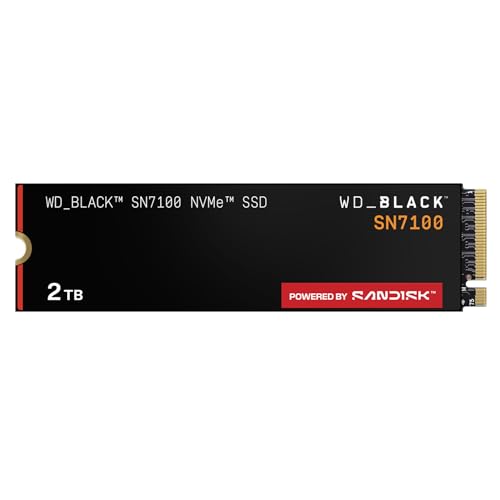
A drive can fit an M.2 slot and still use the wrong interface or protocol, so check both the computer’s documentation and the SSD specifications before buying. M.2 and NVMe describe different things: M.2 is a form-factor standard, while NVMe is a protocol commonly used by SSDs communicating over PCIe. That distinction matters when replacing a laptop drive, adding storage to a motherboard, or choosing an enclosure, because an M.2 connector alone does not establish that every M.2 drive will work. The phrase what is the difference between m 2 and nvme ssd often comes up because product listings use these terms together, even though they are not interchangeable.
Compatibility depends on the specific slot, supported drive type, physical length, and sometimes available lanes or capacity limits documented for the system. An M.2 SSD may use NVMe over PCIe or, in some cases, SATA; those interfaces are not automatically interchangeable. The models listed below also illustrate why specifications need to be read individually: the supplied data describes PCIe generations and M.2 sizes for some internal drives, while another listed item is an external enclosure with its own stated restrictions. For a closer look at the physical and interface distinction, see this M.2 and NVMe form-factor explanation.
| Award | Product | BNR Score About BNR ScoreThe BNR Score is our own rating from 0 to 10, based on performance, design and build, ease of use, and value. It reflects independent research and is never influenced by manufacturers, retailers, or affiliate commissions. Learn more › | |
|---|---|---|---|
| Best Overall |
WD_Black SN7100 2TB NVMe SSD - Gen4 PCIe
|
9.2/10 | Buy |
| Best Budget |
 SABRENT USB-C NVMe Enclosure & Reader |
8.6/10 | Buy |
| Best Value |
 SANDISK Optimus 5100 2TB NVMe SSD, PCIe 4.0 |
8.1/10 | Buy |
 Silicon Power 2TB NVMe M.2 PCIe Gen3x4 2280 SSD |
8.0/10 | Buy |
M.2 is the form factor; NVMe is the protocol
M.2 identifies a physical connector and module format, not a guarantee of NVMe support. NVMe identifies a command protocol designed for nonvolatile storage and commonly carried across a PCIe connection. A product can therefore be an M.2 NVMe SSD, but the two terms are not synonyms. The practical answer is to check the drive’s form factor and interface against the exact slot and support information for the computer.
| Term or example | What the supplied information establishes | What still needs checking |
|---|---|---|
| M.2 | Physical module and connector format; listed internal drives include M.2 2280. | Slot length, keying, supported protocol, and clearance. |
| NVMe | Storage protocol used by PCIe SSDs; one listed enclosure supports NVMe only. | Whether the host slot supports NVMe over PCIe. |
| Silicon Power 2TB drive | Listed as PCIe Gen3x4, M.2 2280, with an M-key requirement. | Whether the system has the required M.2 connector and supports PCIe storage. |
| SABRENT enclosure | Listed for M.2 PCIe NVMe drives in sizes 2230 through 2280; M.2 SATA is excluded. | Whether the specific SSD is NVMe and its size is supported. |
Use these distinctions as a first-pass compatibility check, not as a complete guarantee that a drive will work in a particular computer.
- Confirm that the system slot supports an M.2 drive, then check whether it accepts SATA, PCIe NVMe, or both.
- Match the module length, such as 2280, to the mounting points and space documented for the system.
- Check connector keying and the exact drive interface instead of relying on the M.2 label alone.
- Verify the motherboard or computer documentation for slot sharing, supported PCIe generation, and any capacity limits.
- For an enclosure, confirm NVMe support separately because M.2 SATA drives may not be supported.
Why an M.2 slot does not identify the drive protocol
M.2 describes the compact module and connector arrangement. It does not, by itself, tell a buyer whether a particular drive communicates using SATA or PCIe, or whether the drive uses NVMe. Some M.2 slots support more than one kind of storage, while others have narrower support. The system manual or manufacturer support page is the authority for the slot in a specific laptop or motherboard.
Product listings can add to the confusion by putting “M.2,” “NVMe,” “PCIe,” and a size such as 2280 in one title. Those terms answer separate questions: physical format, protocol or drive type, connection, and module length. A listing that says M.2 2280 does not establish that an NVMe drive is supported by a SATA-only M.2 slot. Likewise, an NVMe label does not tell you whether the module length fits the device.
Keying can provide a clue about connector compatibility, but it should not replace checking documentation. The supplied Silicon Power specification says its PCIe SSD requires an M.2 connector with only an M key and notes that a B-key slot will prevent insertion. That is a product-specific requirement, not a universal description of all M.2 drives. Never force a module into a connector; if keying or fit is unclear, pause and consult the system and drive manufacturers’ instructions.
PCIe generation and speed claims need system context
NVMe drives commonly use PCIe, but the performance figures in a product listing are not a promise that a computer will achieve those speeds. A drive’s supported generation and lane configuration, the host slot, firmware, workload, and other system conditions affect the result. The supplied data identifies some models as PCIe Gen4 and another as PCIe Gen3x4, but does not provide independent benchmark results or a shared test method for comparing them.
Manufacturer maximum sequential read and write figures describe specified workloads and conditions, rather than every task a user performs. Large sequential transfers can behave differently from small random reads, operating-system activity, game launches, or a long write session. If performance is central to the decision, look for independent results that state the test platform, drive capacity, firmware, workload, and thermal conditions. Without comparable methods, headline numbers should not be treated as a direct ranking.
A newer PCIe generation may not deliver its full potential in a system with an older or more limited slot. The slot may still accept a compatible drive and operate at a supported lower link capability, but the manufacturer’s documentation should confirm that for the exact products. Buyers upgrading an older PC should weigh the system’s actual support against the advertised peak figure rather than paying for a specification the host cannot use.
Internal drives and USB enclosures are different compatibility cases
An internal M.2 drive connects directly to a compatible motherboard or laptop slot. An external enclosure instead connects the drive to a host through USB and must support the drive’s protocol as well as its physical size. The supplied SABRENT enclosure information lists USB 3.2 Gen 2 and support for M.2 PCIe NVMe drives from 2230 through 2280, while explicitly excluding M.2 SATA SSDs. That restriction is a useful reminder that matching the physical module alone is not enough.
The enclosure’s listed USB connection also sets a separate part of the data path. An NVMe SSD’s internal PCIe specification does not mean an external USB setup will transfer at that drive’s internal peak rate. The host’s USB port, cable, enclosure, drive, workload, and thermal behavior all matter. The product description’s stated maximum is a manufacturer claim; the supplied information does not include independent transfer measurements or conditions for a sustained workload.
These distinctions matter for cloning, portable storage, or troubleshooting because a drive can be electrically suitable for an internal slot but unsuitable for a particular enclosure, or the reverse. Check the enclosure’s supported protocol and module lengths, then check the computer’s USB capability and the drive’s own specifications. Do not assume that a USB-C connector alone establishes a particular transfer rate or NVMe support.
Use workload and capacity to interpret the specification
Everyday browsing, office tasks, and many game workloads may not keep storage busy enough to make a peak sequential figure decisive. Large media files, repeated project transfers, and other storage-heavy tasks can make throughput more relevant, but a product-page maximum still does not establish sustained performance. For creative work, capacity, the size of active files, backup plans, and the nature of repeated writes may be just as important as the interface label.
Capacity should reflect the files and applications that need to stay available, with room for updates and temporary working data. The supplied product information includes two internal drives identified as 2TB models, but it does not establish that they share the same NAND, endurance rating, warranty, or performance behavior. One model’s specification cannot be transferred to another simply because both have the same stated capacity or M.2 form factor.
Endurance figures and warranty terms are also separate from the M.2-versus-NVMe distinction. The supplied information gives a 600 TBW figure for the Silicon Power drive and explains that its warranty duration or TBW limit may end coverage first. Another product listing gives an endurance figure for a specific capacity version, not necessarily every capacity in that family. Check the exact model and capacity documentation for coverage, workload conditions, and limits; a rating is not a prediction of an individual drive’s lifespan.
Checks that prevent common fit and installation mistakes
Before ordering, identify the exact computer or motherboard model and consult its storage specifications. Look for the supported M.2 protocol, module length, slot keying, PCIe support, and any restrictions on using multiple slots. Laptop owners should also verify available physical clearance and whether the system’s installation instructions specify a particular drive arrangement. The supplied information does not establish compatibility with any particular laptop or motherboard.
Use this later checklist to verify the remaining details against manufacturer documentation before installation.
- Record the exact model number of the computer, motherboard, SSD, and enclosure when applicable.
- Confirm protocol support: an NVMe drive needs a host or enclosure that supports NVMe, not merely an M.2-shaped connector.
- Match the SSD’s stated module length to the system’s mounting position and documented physical clearance.
- Check whether the installed heatsink, laptop cover, or enclosure design leaves the required space without pressure.
- Read the drive’s current warranty and endurance terms for the exact capacity rather than assuming family-wide coverage.
- Follow computer, motherboard, and drive manufacturers’ instructions, including electrostatic-discharge and handling precautions.
A heatsink is not automatically required for every installation, and the supplied data does not establish a universal temperature or cooling need. System design, airflow, workload, and the drive maker’s guidance determine whether a heatsink is appropriate. If a motherboard includes a cover or thermal pad, follow its instructions and check that the assembly is designed for the selected module. Never force a drive or heatsink into place.
How to read the supplied product examples without conflating terms
The product descriptions show several distinct combinations rather than interchangeable labels. The WD_Black drive is listed as a Gen4 PCIe M.2 2280 NVMe model, and the SANDISK Optimus model is listed as PCIe 4.0 M.2 2280. The Silicon Power listing specifies PCIe Gen3x4 and M.2 2280, with a stated M-key requirement. Those details can help identify what to verify, but they do not prove that a particular system supports any one of them.
The SABRENT item is an enclosure, not another internal SSD. Its stated NVMe-only support and excluded M.2 SATA support make it a concrete example of why M.2 is not sufficient as a compatibility description. Buyers should distinguish the storage device from the adapter or enclosure and verify both sides of the connection. The supplied listing information does not provide independent comparative test data for these products.
Product pages can change, and the supplied data may not include every system-specific detail. Confirm current manufacturer documentation for the exact model identifier, interface, size, software support, warranty, and any required system conditions. If the system manual and a retail listing appear to conflict, seek clarification from the relevant manufacturer rather than relying on a generalized M.2 or NVMe label.
When an M.2 SATA drive is relevant
M.2 SATA is useful context because it demonstrates that the M.2 form factor does not automatically mean NVMe. Such a drive uses SATA rather than NVMe over PCIe, and a host or enclosure may support one type without supporting the other. The exact slot capabilities matter: some systems document support for both protocols, while others specify only one. The related SATA M.2 and NVMe M.2 comparison can help clarify that interface distinction.
Do not infer that an M.2 SATA drive will fit or function simply because it shares a module shape with an NVMe drive. Check the connector keying and system support, but treat the manufacturer’s compatibility list as decisive. The same principle applies to an enclosure: physical size support and protocol support are separate specifications, and both must match the intended SSD.
For a practical purchase decision, write down the slot’s protocol support, the SSD’s interface and module length, and any stated capacity or clearance limits, then verify each item in current documentation. M.2 is the physical format; NVMe is the protocol, so matching both the drive and host specifications is the key next step.
About the author
Elena Vasquez covers console and laptop storage, including PS5-compatible NVMe drives, external enclosures, and adapters. She focuses on compatibility requirements and practical setup advice for readers expanding storage on devices with specific limits.