
Ssd Sata vs Nvme vs M2: Check Compatibility First
Check the difference between SATA, NVMe, and M.2 before buying. This guide compares listed drives and key fit questions for ssd sata vs nvme vs m2 in November 2026.
 By Tyler Brooks
Updated November 12, 2026

An M.2 slot doesn’t automatically mean your computer accepts every M.2 drive, and mixing up the terms can lead to a costly mismatch. ssd sata vs nvme vs m2 is really a comparison of two interfaces or protocols with a physical form factor, not three interchangeable drive types. The listed options include PCIe NVMe drives in different capacities and generations, plus an enclosure that accepts both NVMe and SATA M.2 SSDs. That enclosure is not itself a storage drive, so it serves a different purpose from the internal SSDs. Before buying, check your computer’s manual for the supported interface, M.2 length, and available slot.
Capacity and advertised speed matter only when they suit your system and workload. The Kingston NV3 and SIX model list PCIe 4.0, while the Silicon Power drive lists PCIe 3.0 and 2TB capacity; the SANDISK listing is for a 500GB drive, with some higher speed claims applying to other capacities. Those details offer useful comparison points, but maximum speeds aren’t guaranteed in every host system or task. The difference between SATA and NVMe SSDs can help clarify the protocol question, while your laptop or motherboard manual confirms what fits. This roundup sticks to supplied product details and general compatibility guidance, so you can narrow the choices without treating a headline speed as a promise.
| Award | Product | BNR Score About BNR ScoreThe BNR Score is our own rating from 0 to 10, based on performance, design and build, ease of use, and value. It reflects independent research and is never influenced by manufacturers, retailers, or affiliate commissions. Learn more › | |
|---|---|---|---|
| Best Overall |
Kingston NV3 1TB M.2 2280 NVMe SSD
|
8.8/10 | Buy |
| Best Premium |
 SIX NVME M.2 SSD PCIe 4.0-1TB m.2 2280 ssd |
8.6/10 | Buy |
| Best Budget |
 SANDISK Optimus 5100 500GB NVMe SSD, PCIe 4.0 |
8.4/10 | Buy |
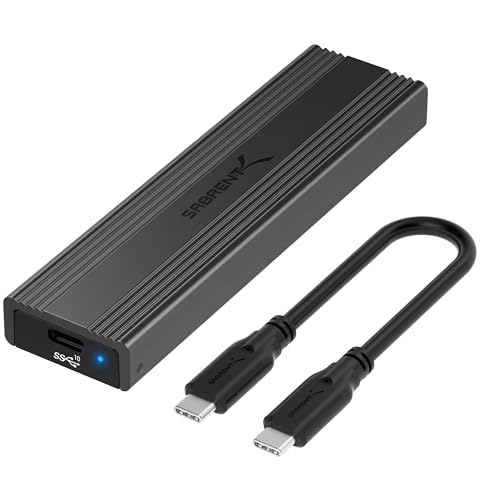 SABRENT Tool-Free NVMe & SATA M.2 SSD Enclosure |
8.3/10 | Buy | |
 Silicon Power 2TB NVMe M.2 PCIe Gen3x4 2280 SSD |
8.0/10 | Buy |
SSD and M.2 Buying Questions
Is M.2 the same thing as NVMe?
No, M.2 describes a drive’s physical form factor, while NVMe is a storage protocol commonly used over PCIe. An M.2 SSD may use SATA instead, so check your system’s supported interface and slot before purchasing.
Will any M.2 NVMe SSD work in my laptop?
No, compatibility depends on your laptop’s supported M.2 form factor, interface, and sometimes drive length. Check the manual and available clearance before ordering; the product listings alone don’t confirm compatibility with your specific laptop or motherboard.
Can a PCIe 4.0 SSD work in a PCIe 3.0 system?
Generally, PCIe devices can operate at a mutually supported generation, but confirm support in your motherboard or laptop documentation. A drive’s advertised sequential read speed may not be available on an older PCIe connection or in every workload.
Does the SABRENT enclosure include an SSD?
No, the SABRENT Tool-Free NVMe & SATA M.2 SSD Enclosure is an enclosure only, and the SSD is not included. Its listing specifies support for bare 2242, 2260, and 2280 M.2 NVMe or SATA drives, with no heatsink clearance.
How much capacity should I choose for games and projects?
Choose capacity around the files, applications, and games you expect to keep installed, plus room for future additions. These listings range from 500GB to 2TB for internal drives; 2TB M.2 NVMe capacity considerations may help you weigh storage needs.
About the author
Tyler Brooks writes about SSD performance, endurance ratings, and thermal behavior. He reviews manufacturer documentation, independent test data, and customer feedback to explain how heatsinks, throttling, and DRAM cache affect everyday use.