
Is Nvme or Sata Better
Is NVMe or SATA better depends on the device and workload. Learn how protocols affect speed, compatibility, and external enclosures in November 2026.
 By Marcus Hale
Updated November 12, 2026

If you’re choosing storage for a computer, NVMe is generally the faster protocol, while SATA can be suitable when a system or workload doesn’t need NVMe performance. Is NVMe or SATA better depends on what the device supports and whether you mean an internal drive or an external enclosure. The names describe different storage interfaces and protocols, so an M.2 shape alone does not tell you whether an SSD uses NVMe or SATA. Checking the computer’s specifications and the drive’s protocol is essential before buying or connecting anything.
For external use, the enclosure also matters: its supported protocols and USB connection can limit transfer rates, regardless of the SSD inside. The supplied product information describes two enclosures that accept both NVMe and SATA M.2 drives, but their stated transfer limits are not a direct comparison of internal SSD performance. The SATA and NVMe distinction explains the basic protocol difference, while a form-factor compatibility overview helps clarify why an M.2 drive’s keying and protocol both need checking. Match the drive, enclosure, host port, and intended workload before deciding which option makes sense.
| Award | Product | BNR Score About BNR ScoreThe BNR Score is our own rating from 0 to 10, based on performance, design and build, ease of use, and value. It reflects independent research and is never influenced by manufacturers, retailers, or affiliate commissions. Learn more › | |
|---|---|---|---|
| Best Overall |
M.2 NVME SATA SSD Enclosure Adapter ,V VCOM USB
|
8.6/10 | Buy |
| Best Value |
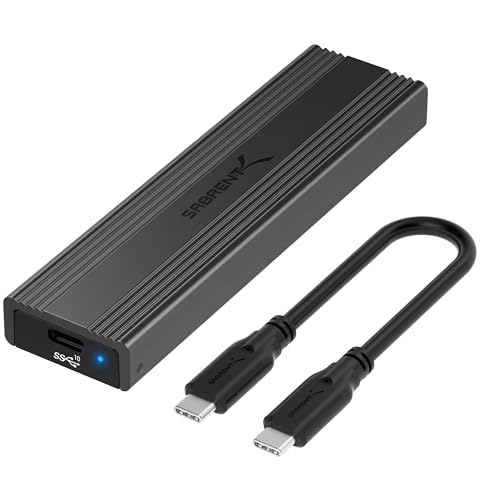 SABRENT Tool-Free NVMe & SATA M.2 SSD Enclosure |
8.3/10 | Buy |
NVMe or SATA: the better choice depends on the connection
NVMe is generally the better fit when a computer supports it and higher storage throughput matters; SATA remains a reasonable choice for supported systems and less demanding tasks. That general distinction doesn’t establish the performance of a particular drive, because model, capacity, workload, system support, and connection all affect results. For an external M.2 setup, a USB enclosure adds another limit, so a fast internal protocol can’t automatically deliver its full potential over every USB connection. The product information provided here describes enclosure features, not independent measurements of SSD performance.
| Connection or enclosure detail | Information supplied | What it means for the comparison |
|---|---|---|
| VCOM enclosure | USB 3.2 Gen 2; stated up to 10 Gbps for NVMe and 6 Gbps for SATA | Manufacturer-described interface limits, not measured SSD results |
| SABRENT enclosure | USB 3.2 Type-C; stated up to 10 Gbps | Enclosure claim; actual transfer depends on the connected system and drive |
| Drive support listed for both | M.2 NVMe and SATA, with supported lengths listed | Check the individual drive protocol and physical fit before use |
Use these distinctions to keep the protocol question separate from the enclosure’s advertised connection:
- NVMe and SATA are different protocols, even when an SSD has an M.2 form factor.
- A computer’s supported slot and interface determine which internal drive types can work.
- An external enclosure’s USB connection can constrain transfers from either protocol.
- Advertised interface rates are not the same as measured file-transfer results.
- A dual-protocol enclosure still requires a drive that matches its supported length and keying.
What NVMe and SATA describe
SATA is an interface associated with a storage protocol used by SATA drives, while NVMe is a protocol designed for communication with storage over PCIe. NVMe drives can support higher throughput than SATA drives when the drive and the connected system support the necessary interface. That broad technical distinction is useful, but it does not say how much faster a particular task will feel. Everyday use, large transfers, and sustained workloads can place different demands on storage.
M.2 describes a drive’s physical form factor, not a guarantee that the drive uses NVMe. M.2 SSDs may use NVMe or SATA, and a slot that accepts one type may not support the other. Keying can help identify a drive’s physical interface, but it should not replace checking the computer or motherboard documentation. For a system upgrade, confirm both the physical slot and the protocols it supports.
The VCOM enclosure listing identifies support for M.2 NVMe and SATA drives, including several stated drive lengths, and gives different maximum interface rates for the two protocols. Those are product-description claims about the enclosure connection, not evidence that every compatible SSD reaches those rates. The listing also describes USB Type-C connections and included cables. Check the host’s actual USB capability, because a connector’s shape alone does not establish its data-transfer standard.
How workload changes the answer
NVMe’s potential throughput can matter more when moving large files or handling storage-heavy work, provided the drive, host interface, and workload can use it. SATA may be adequate for everyday tasks if the existing system supports SATA and the user’s needs do not call for higher throughput. Neither protocol alone determines application responsiveness, since processor, memory, software, and other system conditions also contribute. A specification comparison should therefore be treated as one part of a system decision, not a promise about a particular task.
For gaming, the SSD protocol is only one component of the full experience, and the supplied information does not include game-loading benchmarks for either drive or enclosure. A faster advertised interface should not be translated into a guaranteed or universally noticeable improvement. For creative work, frequent large transfers may make throughput more relevant, but sustained behavior and the actual files and workflow matter. Buyers should look for results measured under conditions that resemble their own use before paying extra for a speed claim.
Capacity is another practical consideration, but the provided enclosure descriptions do not specify a storage capacity because neither product includes an SSD capacity as part of the stated information. The SABRENT listing explicitly says the enclosure is sold without an SSD. Confirm the capacity of the drive purchased separately and ensure the computer, operating system, and intended workload can use it as expected. Do not infer drive capacity from an enclosure’s form-factor support.
Why an external USB connection changes performance
An external enclosure sits between the SSD and the computer, so the USB interface and the host’s USB support affect transfers. The VCOM description gives separate maximum rates for NVMe and SATA protocols over the enclosure, while the SABRENT description states a USB connection rate and a claimed real-transfer ceiling. These are manufacturer-provided product details, not results from a shared benchmark. They should not be treated as directly comparable measured performance.
Real transfers can vary with the host port, cable, SSD model, file sizes, available free space, workload, and other system conditions. Small files and large sequential transfers do not behave identically, so a single headline figure cannot represent every task. USB port labels and system documentation are more reliable than connector appearance for determining supported data rates. If the computer uses a slower connection, the enclosure’s higher stated ceiling may not be available.
The SABRENT product information says its enclosure supports NVMe and SATA M.2 drives in specified lengths, uses USB Type-C, and has no clearance for a drive with a pre-installed heatsink. Its listed transfer claims should be read as manufacturer statements, not independent verification. The VCOM listing describes support for both protocols, several lengths, a thermal pad, and a metal housing. Those enclosure details don’t establish an SSD’s performance, temperature, endurance, or suitability for a particular computer.
Compatibility checks for M.2 drives and enclosures
Before buying an internal SSD, consult the computer or motherboard manufacturer’s documentation for supported protocols, slot availability, and drive length. For an external enclosure, verify the drive’s protocol and physical length against the enclosure listing. The two listings supplied here describe support for both NVMe and SATA M.2 drives, but compatibility with a particular drive or computer should not be assumed without checking the relevant documentation. Product compatibility details are model-specific.
Pay attention to heatsinks and physical clearance as well as protocol. The SABRENT listing says there is no room for a drive with a pre-installed heatsink, while the VCOM listing describes its own enclosure cooling features. These statements concern the enclosure designs, not a universal requirement for an SSD heatsink. Check whether the drive’s existing heatsink can fit and whether the enclosure’s supplied parts are intended for the drive you plan to use.
These checks help prevent common mismatches before an order or installation:
These checks help prevent common mismatches before an order or installation:
- Confirm whether the M.2 drive uses NVMe or SATA, rather than relying on its shape.
- Check the computer or enclosure documentation for supported drive lengths and keying.
- Verify that the host port supports the enclosure’s stated USB connection standard.
- Check clearance when a drive has a pre-installed heatsink or cooling parts.
- Read the product listing carefully to confirm whether an SSD is included.
- Follow system and drive manufacturer instructions, including handling precautions, during installation.
Enclosure features are not SSD performance evidence
Enclosure features can affect convenience and compatibility without proving that one SSD protocol is faster in a specific use. The VCOM listing describes a tool-free-style access approach, included cables, an indicator, and cooling components; the SABRENT listing describes tool-free use, a thermal pad, and a bus-powered design. These are descriptions from product information. They do not substitute for a benchmark that identifies the SSD, computer, connection, workload, and test method.
Software support and operating-system compatibility should also be assessed from current manufacturer documentation. The VCOM description lists several operating systems and says additional drivers or software are not required, while the SABRENT description provides its own operating-system information. Such statements apply to the enclosure as described, not necessarily to every SSD, device, or configuration. For phones and tablets in particular, verify that the device supports the connection and file access you intend to use.
Warranty and endurance are separate from protocol speed. The supplied details do not provide SSD endurance ratings or complete warranty terms for the drives that might be installed, and an enclosure listing cannot fill in those missing details. Check the actual SSD manufacturer’s documentation for endurance, warranty coverage, and any registration requirements. Do not interpret a warranty as a forecast of a drive’s lifespan or a guarantee that stored data cannot be lost.
How to compare claims without overstating them
Compare figures only when their units, test method, drive model, capacity, host, and connection conditions are known. An advertised maximum rate for a USB enclosure is not equivalent to an SSD benchmark conducted internally over PCIe. A manufacturer’s “up to” claim describes a ceiling under specified or assumed conditions, not a result every buyer should expect. Without comparable independent measurements, the sound conclusion is limited to the specifications disclosed.
For a useful comparison, look for sequential and random results when they address your workload, and check whether sustained transfers were measured. Sequential figures can help frame large-file transfers, while random access measures a different pattern of work. Neither category alone captures every application or user experience. Benchmark methodology matters because queue depth, test duration, drive fill level, and thermal conditions can change outcomes.
Thermal claims also need context. An enclosure’s metal shell or thermal pad may be intended to move heat away from a drive, but the supplied listings do not provide measured temperatures or throttling results. Ambient conditions, workload duration, airflow, and the installed SSD can affect temperatures. Treat cooling descriptions as design information, not proof of a particular temperature or performance level.
A practical decision can follow the evidence available:
- Choose NVMe when the system supports it and its potential throughput fits the workload.
- Consider SATA when the system requires it or its performance is sufficient for the task.
- For external storage, match the SSD protocol to the enclosure and host connection.
- Use comparable benchmark methods before drawing conclusions from numerical claims.
- Check warranty and endurance from the SSD maker, not from enclosure specifications.
Make the decision from the system outward
Start with the computer’s supported interface, then identify the workload and connection path. If an internal slot supports NVMe and the work benefits from higher throughput, NVMe is generally the more capable protocol; if the system supports only SATA or the workload does not need more, SATA can remain a sensible fit. For external use, the enclosure and USB port may become the limiting parts. This conditional answer is more useful than treating one protocol as universally superior.
Product descriptions can help narrow enclosure compatibility, but they do not establish the performance of an SSD that is not specified. The listings supplied here identify dual-protocol enclosure support and connection details, not comparable test results for installed drives. Confirm protocol, physical fit, host connection, heatsink clearance, and included components against current manufacturer documentation. Follow the computer, motherboard, enclosure, and drive instructions, and observe appropriate electrostatic-discharge and handling precautions.
In short, NVMe generally offers more throughput potential, while SATA may be sufficient or necessary depending on the system. Verify the slot or USB path first, then decide whether the workload justifies the difference.
About the author
Marcus Hale is a storage and PC hardware writer covering NVMe SSDs, M.2 drives, and gaming PC upgrades. He focuses on turning spec sheets, controller and cache details, and published benchmark data into clear comparisons that help readers pick the right drive for their budget.