
How Reliable Are Nvme Drives
NVMe drives can be reliable, but lifespan depends on workload, drive condition, and system support. Learn what endurance ratings mean in November 2026.
 By Marcus Hale
Updated November 13, 2026
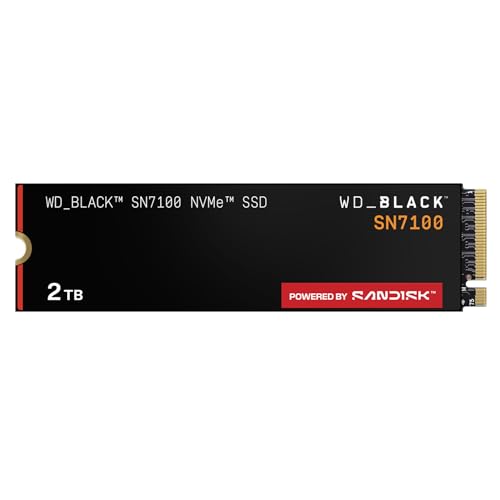
A properly supported NVMe drive can provide dependable storage, but no SSD is immune to wear, failure, or data loss. The practical answer to how reliable are nvme drives depends on the specific model, how much data is written, operating conditions, and the host system. NVMe describes a storage protocol, PCIe describes the interface and its generation, and M.2 describes a physical form factor; none of those terms alone establishes reliability. A drive’s product documentation and warranty terms are more useful than assuming every NVMe model has the same endurance.
Reliability matters especially when replacing a system drive, keeping work files, or moving an operating system. Check the manufacturer’s stated endurance rating, if supplied, and understand that it describes a rated write allowance rather than a promised failure date. Capacity, workload, cooling, compatibility, and backups also affect ownership decisions. The product information included here illustrates that listed capacities, interfaces, and warranty terms can differ, but those details are not independent reliability tests or proof of how a drive will perform in a particular computer.
| Award | Product | BNR Score About BNR ScoreThe BNR Score is our own rating from 0 to 10, based on performance, design and build, ease of use, and value. It reflects independent research and is never influenced by manufacturers, retailers, or affiliate commissions. Learn more › | |
|---|---|---|---|
| Best Overall |
WD_Black SN7100 2TB NVMe SSD - Gen4 PCIe
|
9.2/10 | Buy |
| Best Premium |
 Kingston NV3 1TB M.2 2280 NVMe SSD |
8.8/10 | Buy |
| Best Budget |
 SABRENT USB-C NVMe Enclosure & Reader |
8.6/10 | Buy |
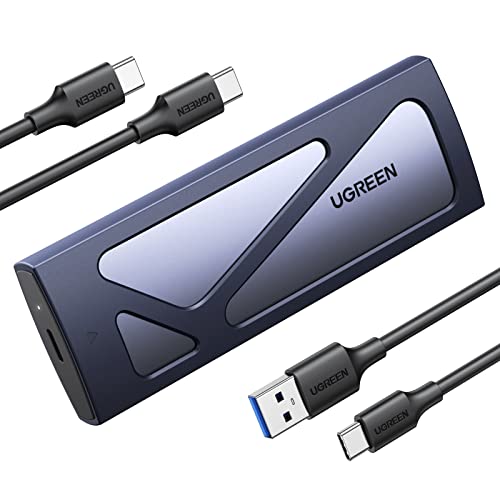 UGREEN USB-C M.2 NVMe SSD Enclosure, 10Gbps |
8.4/10 | Buy | |
| Best Value |
 fanxiang S500 Pro 256GB NVMe SSD M.2 PCIe 3.0 |
8.4/10 | Buy |
 SANDISK Optimus 5100 500GB NVMe SSD, PCIe 4.0 |
8.4/10 | Buy | |
 fanxiang S501 128GB NVMe SSD 3D NAND1.3 PCIe |
8.0/10 | Buy |
What determines NVMe drive reliability
NVMe drives can be reliable for everyday storage, but their service life cannot be predicted from the protocol or interface alone. Assess the exact model’s endurance information, warranty, workload demands, system compatibility, and operating conditions, then keep a separate backup of important data. A manufacturer rating is useful context, not a guarantee that a particular drive will last for a fixed period.
Reliability is not the same as speed
Advertised sequential read and write speeds describe transfer performance under particular conditions, not the probability that a drive will avoid failure. Sequential speed describes a particular type of transfer and does not predict every everyday task. Reliability instead concerns whether storage remains usable and data remains accessible over time, which depends on the drive and the environment in which it operates. A fast model is not automatically more reliable than a slower one.
NVMe is a protocol used to communicate with storage, commonly over PCIe in internal M.2 drives. PCIe generations describe interface capabilities, while M.2 refers to a connector and physical form factor family. These labels answer different questions: how the drive communicates, what connection it uses, and how it is shaped. None is itself an endurance rating, and a newer generation does not inherently mean longer service life.
Reliability discussions often use endurance ratings such as terabytes written, abbreviated TBW, when a manufacturer provides one. TBW is a rated quantity of writes over the stated warranty context; it is not an exact countdown to failure. A drive may continue working after a rated allowance, or it could fail for another reason before reaching it. Always consult the precise model’s documentation because ratings and warranty conditions vary.
What endurance ratings can and cannot tell you
Endurance ratings help compare the amount of writing a drive is designed to accommodate, especially for workloads that repeatedly save large amounts of data. They do not provide a universal reliability score or a date when the SSD should be replaced. Warranty coverage is also distinct from endurance: its duration and conditions are set by the manufacturer, and claims may have limits. Read the warranty and endurance terms together rather than treating either as a guarantee.
One supplied product description lists up to 160 TBW for a particular capacity, while another gives an endurance figure for a different capacity. Those are manufacturer-listed specifications, not independently verified outcomes, and they should not be generalized to other models or capacities. For the products listed below, the available information does not provide a consistent set of endurance ratings. That makes model-specific documentation essential before comparing rated write allowances.
Capacity can affect endurance because a larger drive may distribute writes across more flash storage, but buyers should not infer a specific rating without a source. NAND type alone also does not establish how long a complete drive will last. Controller behavior, firmware, workload, and the manufacturer’s design all matter, and the supplied product descriptions do not establish a common reliability ranking. Use documented model-level figures where available, not assumptions based on a broad product category.
Match expected writes to the workload
Typical desktop activity, such as browsing, office work, and launching applications, usually involves a different write pattern from sustained video capture, frequent large project exports, scratch-disk use, or database activity. A workload with repeated heavy writes makes endurance information more relevant. This does not mean an everyday user can ignore backups or that a creator must automatically buy the highest-rated drive. Estimate the type and frequency of writes, then compare them with the exact model’s stated limits and warranty terms.
Games may read substantial amounts of data while installation, updates, saved files, and recordings create writes. Faster advertised sequential speeds may matter for some transfers, but they do not establish better reliability or guarantee a noticeable improvement in routine play. A gaming PC owner should consider capacity, host support, cooling provisions, and the intended workload alongside endurance. Avoid choosing solely by peak speed when the actual concern is sustained writing or dependable data storage.
Content creation can include both large sequential transfers and repeated writes to temporary or project files. A drive used as a scratch location may face a different write load from one holding completed media that is mostly read. Separate workloads across storage only when the system and software support that arrangement and it serves a clear purpose. Keep original project files and finished work backed up independently, since a second partition on the same physical SSD is not a separate backup.
Conditions that can affect service life
Operating temperature and cooling matter because an SSD must remain within the limits specified for the drive and host. High temperatures may cause some drives to reduce performance, but behavior varies by model, workload, and system airflow. Do not assume a heatsink is included or required based only on an M.2 label. Check the drive documentation and motherboard or laptop guidance, including whether a cover or thermal pad is already part of the system design.
Physical installation can also affect whether a drive operates correctly. A drive that is not seated as instructed, or that is forced into an incompatible slot, can cause detection or operational problems and may risk connector damage. Power the computer down and disconnect it as directed by its manufacturer before opening the system. Follow the host and drive instructions, handle components carefully, and do not improvise around a slot, fastening point, thermal pad, or system warning.
Compatibility is a reliability consideration because an unsupported drive may not function as intended, even if it fits physically. Confirm that the host’s documented slot supports NVMe rather than assuming every M.2 slot does. Check supported PCIe generation, physical dimensions, available clearance, and any listed capacity or boot restrictions. A drive can use a compatible connection while operating at a lower supported interface level, but the specific computer documentation determines what is supported.
Checks to make before selecting a drive
Use this checklist to separate documented reliability information from assumptions about a product family.
- Find the exact model number and read its manufacturer endurance and warranty documentation.
- Estimate whether the workload involves occasional writes or frequent sustained data writing.
- Verify that the host slot supports NVMe and the drive’s physical dimensions.
- Check the supported PCIe generation and any system-specific capacity or boot limitations.
- Review the computer’s cooling arrangement and the drive’s stated operating guidance.
- Keep an independent backup for important files, regardless of endurance figures.
A product description may state a warranty term, but that term does not prove that every unit will reach its endpoint without problems. For example, one listed model specifies a five-year limited warranty, while another description states a three-year quality assurance service. Their terms are not interchangeable, and the available details do not establish equivalent coverage. Verify the manufacturer’s current documentation, exclusions, and claim process for the exact item and region.
Recognize warning signs without assuming the cause
Unexpected read-only behavior, repeated system errors, disappearing storage, or files that cannot be opened can have several possible causes. The symptom alone does not prove that the flash memory has worn out. Connection problems, system configuration, firmware, overheating, or an underlying drive fault may all need consideration. If important data remains accessible, prioritize copying it to a separate, known-good location before attempting changes that could complicate recovery.
Operating systems and manufacturer utilities may report health information, temperature, or error indicators, but the available measurements and interpretation vary. Use tools and instructions supported by the drive maker and host system. A clean status report is not a substitute for a backup, and a single warning should not be ignored simply because the drive remains visible. If the drive contains valuable data and access is unstable, avoid repeated experiments that may increase risk.
When a drive disappears, first distinguish a detection issue from a confirmed failure. Consult the computer’s documentation for supported slots and configuration, then follow its safe shutdown and inspection instructions. Do not reseat components while the system is powered unless the manufacturer explicitly instructs otherwise. If another computer or compatible enclosure is considered for diagnosis, confirm protocol and physical compatibility first; an NVMe-only enclosure will not necessarily support an M.2 SATA drive.
Safe practices for installation and migration
Replacing a system drive involves both hardware compatibility and data handling. Before migration, identify which drive holds the original files, confirm the destination’s supported capacity and interface, and read the software and hardware instructions. Cloning utilities may be provided with some products, but their presence does not guarantee that a migration will complete correctly. Preserve a separate backup and verify important files before erasing or repurposing the original drive.
Use the host manufacturer’s shutdown and disconnection procedure, then follow the drive maker’s installation directions. Handle the SSD carefully and avoid touching or stressing its connector. Do not force the module, over-tighten a fastener, or remove a thermal component unless the instructions call for it. If the slot, screw, shield, or thermal pad arrangement is unclear, stop and consult the system documentation rather than guessing.
After installation, follow the computer’s documented method to check whether the drive is detected and initialized. A new drive may need an operating-system setup step before it appears as usable storage, while a boot drive may require system-specific configuration. Do not format a disk until you have identified it and confirmed that it contains no data you need. If detection fails, return to documented compatibility and installation checks instead of assuming the drive is defective.
Migration changes can lead to data loss if the wrong source or destination is selected, a process is interrupted, or an existing backup is incomplete. Make a separate backup before starting, connect power as the manufacturer recommends, and avoid interrupting the process unless instructed. Confirm that the new system starts and that essential files are accessible before relying on it as the only copy. An SSD, cloning tool, or enclosure does not replace a backup strategy.
These practices help reduce avoidable installation and migration problems.
- Confirm the exact host slot, NVMe support, and drive dimensions in manufacturer documentation.
- Back up important files to a separate device or service before making storage changes.
- Power down and disconnect the computer according to its published instructions.
- Handle the drive carefully and never force its connector or mounting hardware.
- Use manufacturer-supported migration tools and verify the selected source and destination.
- Check detection and important files before erasing or reusing the original drive.
How to think about reliability when buying
Start with the role the SSD will serve. A boot and application drive for ordinary home use may have different endurance needs from a drive receiving repeated large writes. Capacity should also reflect the files and applications to be stored, since a nearly full drive can create practical management constraints even when its health indicators appear normal. Choose from documented workload fit and host support rather than assuming a particular PCIe generation makes a drive inherently durable.
Manufacturer-listed speeds, NAND descriptions, and software features can help characterize a model, but they do not independently establish reliability. Specifications for different capacities within one product family may also differ, so do not transfer a figure from a larger version to a smaller one. Compare only claims that apply to the exact capacity and model under consideration. If an endurance rating or warranty detail is missing, treat that as unknown rather than filling the gap with a category-wide estimate.
A higher PCIe generation may help when the host system supports it and the workload can use the additional performance. It does not necessarily improve everyday responsiveness in a way the user will notice, and it does not by itself prove better endurance. A drive may also operate below its maximum interface capability in a system with an older supported connection. Confirm the system’s actual documentation before paying more for a feature the host cannot use.
Consider warranty conditions alongside expected use, but do not treat warranty length as a measured prediction of lifespan. Warranty coverage can have specific exclusions or write limits, and service terms can change by product and region. Preserve purchase and model information if you need to make a claim. Read the current terms for the exact drive rather than relying on a general description or another capacity’s policy.
Backups remain essential with SSD storage
Flash storage has no moving mechanical parts, but that design characteristic does not make an SSD failure-proof. Electronic components, firmware, connectors, power events, user errors, and other system problems can still affect access to files. Reliability is best approached as risk management: use a supported drive, avoid unsafe handling, monitor relevant manufacturer-provided information, and maintain more than one copy of important data. A second partition on the same drive does not protect against failure of that drive.
Choose a backup method that keeps a recoverable copy separate from the computer’s internal SSD, and check that the files can be restored. The appropriate schedule depends on how often the data changes and how costly losing recent work would be. A cloud copy, external storage, or another backup arrangement can serve different needs, but no single method should be assumed suitable for everyone. Keep recovery information and access credentials available without storing the only copy on the drive being protected.
For a drive showing serious errors, prioritize data preservation over attempts to improve performance. Avoid firmware changes, formatting, or repeated write-heavy diagnostics when the data is not backed up and the cause is uncertain. Follow manufacturer guidance and seek qualified data-recovery help when the files are valuable and normal access is failing. No software status screen can guarantee that data is safe or that a failing drive will remain readable.
In practical terms, treat NVMe reliability as model-specific and workload-dependent: verify the exact endurance and warranty terms, confirm host support, and keep important files backed up independently.
About the author
Marcus Hale is a storage and PC hardware writer covering NVMe SSDs, M.2 drives, and gaming PC upgrades. He focuses on turning spec sheets, controller and cache details, and published benchmark data into clear comparisons that help readers pick the right drive for their budget.