Does Iphone Use Nvme
Does Iphone Use Nvme: Learn how iPhone internal storage differs from external NVMe SSDs, what USB-C recording requires, and which compatibility details matter in November 2026.
 By Marcus Hale
Updated November 12, 2026
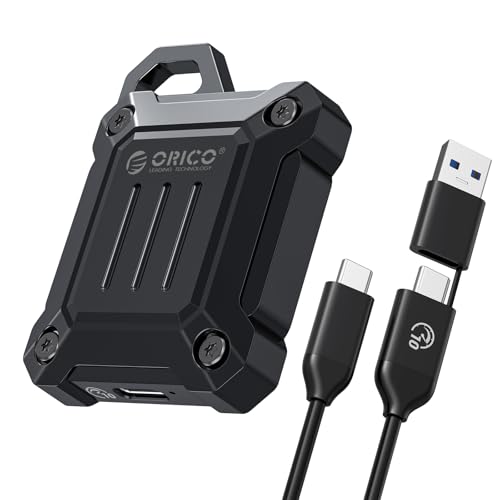
If you’re checking an iPhone’s storage before recording or moving files, its built-in storage is not a user-replaceable NVMe SSD; external NVMe storage can connect to some USB-C iPhones for supported uses. The question does iphone use nvme has two distinct answers: the phone’s internal storage and a separate drive connected through an enclosure are not the same thing. Apple does not document the iPhone’s internal storage as a conventional M.2 NVMe drive that owners can remove or upgrade. External recording support depends on the iPhone model, app, recording format, connection, and storage device, so an enclosure’s compatibility claim should be checked against Apple’s current device guidance.
That distinction matters if you’re trying to expand space for video or reuse an M.2 drive from a computer. An enclosure can bridge an internal NVMe SSD to a phone’s USB-C port, but it doesn’t turn the phone’s built-in storage into NVMe or make every iPhone support direct recording. Check the phone model and its documented recording features, then verify that the enclosure accepts the SSD’s protocol and physical size. The listed product information includes examples of external enclosures and hubs, but those descriptions are manufacturer claims rather than independent confirmation of a particular setup.
| Award | Product | BNR Score About BNR ScoreThe BNR Score is our own rating from 0 to 10, based on performance, design and build, ease of use, and value. It reflects independent research and is never influenced by manufacturers, retailers, or affiliate commissions. Learn more › | |
|---|---|---|---|
| Best Overall |
ORICO Full Metal M.2 NVMe 2230 SSD Enclosure
|
9.2/10 | Buy |
 SEINIKAY Magnetic Mini M.2 Enclosure |
8.4/10 | Buy | |
| Best Value |
 ORICO Magnetic M.2 2230/2242 NVMe SSD Enclosure |
8.8/10 | Buy |
 ORICO M.2 2230 NVMe SSD Enclosure |
8.1/10 | Buy | |
| Best Budget |
 ORICO M.2 NVMe 2230 SSD Enclosure with Aluminum |
8.6/10 | Buy |
| Best Premium |
 TWOPAN USB C iPhone Hub with Aluminum M.2 NVMe |
8.0/10 | Buy |
 TWOPAN iPhone USB C Hub with M.2 2230 NVMe |
7.8/10 | Buy |
iPhone internal storage and external NVMe are different
An iPhone doesn’t expose its built-in storage as a removable M.2 NVMe SSD. Some USB-C iPhone models can work with external storage for particular workflows, including compatible external recording, but that connection does not change the phone’s internal storage technology or capacity. Whether an external drive can be used for a specific recording mode depends on the exact phone model and the applicable software and accessory requirements.
What “NVMe on an iPhone” can mean
In everyday product listings, “NVMe for iPhone” generally refers to an external enclosure or hub that holds an NVMe SSD and connects to the phone over USB-C. The NVMe drive communicates with the enclosure, and the enclosure presents storage to the host over its USB connection. The iPhone is the host device in this arrangement, not a computer with an exposed M.2 slot for installing the SSD internally.
Three terms describe different parts of this arrangement. NVMe is a storage protocol, PCIe is the interface commonly used by an internal NVMe SSD, and M.2 describes a physical card form factor and connector family. An enclosure converts the drive’s connection for use through USB; it does not make these terms interchangeable.
External recording depends on the iPhone model
External storage support is not a blanket feature of every iPhone. Product descriptions supplied for some enclosures identify iPhone 15 Pro or Pro Max compatibility for direct ProRes recording, while other listings name additional model generations and distinguish recording modes by model. Treat those details as claims from the product descriptions, and confirm current Apple guidance for the exact phone, format, frame rate, and app before relying on a recording setup.
A USB-C connector alone doesn’t establish that every recording feature will work. The phone must support the intended recording workflow, the software must offer the relevant option, and the external storage must be recognized and suitable for that use. A drive may still be usable for transferring or accessing files even if a particular direct-recording mode is unavailable.
Check these details before connecting an enclosure
These checks help separate the phone’s capabilities from the enclosure’s specifications.
- Confirm the exact iPhone model and the manufacturer-documented external recording support.
- Check whether the intended video format and recording mode allow external storage.
- Verify that the enclosure supports NVMe, rather than only M.2 SATA storage.
- Match the SSD’s M.2 length to the enclosure’s supported physical dimensions.
- Review the enclosure’s USB interface and the phone’s connection requirements.
- Check the drive’s capacity and format requirements for the intended file workflow.
M.2 size and protocol must match the enclosure
Many phone-oriented enclosures are built for short M.2 drives, such as 2230, and some also list support for 2242. Those numbers describe physical card dimensions, not a speed rating or proof of iPhone compatibility. An SSD that is too long or uses an unsupported protocol may not fit or function, even if its connector looks similar.
Read the enclosure’s supported-drive details carefully. Some supplied listings explicitly say they accept M-key NVMe drives and exclude M.2 SATA; another product description claims support for both NVMe and SATA. That difference illustrates why a generic “M.2 enclosure” label is not enough to establish protocol support.
USB transfer limits differ from an SSD’s PCIe connection
An internal NVMe SSD is designed to connect through PCIe, whereas a portable enclosure connects to the phone using USB. The USB link and the host device’s capabilities affect transfers, so the drive’s advertised internal interface or peak figure does not directly predict performance on an iPhone. Product descriptions in the supplied information state USB 3.2 Gen 2 and up to 10 Gbps for some enclosures, but that is a manufacturer-listed interface figure, not a guarantee of sustained file speed.
Sequential speed describes a particular type of data transfer and doesn’t predict every everyday task. Recording and copying large video files can place different demands on storage than browsing documents or opening smaller files. The phone, cable, enclosure, SSD, file system, and workload can each affect the result, so a higher advertised peak number alone is not a reliable basis for judging a complete setup.
Storage capacity, power, and handling affect a mobile setup
An external drive can provide space for files without increasing the iPhone’s built-in capacity. The enclosure and SSD must be treated as a connected storage accessory, and users should confirm that the phone recognizes it and that the relevant app can save to it. A hub with a charging port may offer pass-through power according to its listing, but power behavior depends on the accessory, charger, cable, and host.
Enclosures also add physical bulk and another connection that can be disturbed while filming or transferring data. Some supplied listings describe metal housings, thermal pads, heatsinks, or magnetic attachment, but those features do not establish a particular operating temperature or guarantee that throttling will never occur. Follow the drive, enclosure, and phone makers’ instructions, and don’t ignore temperature warnings.
Prepare files and protect data before recording
External storage is useful only if the intended app and file workflow can access it. Check the phone’s current settings and documentation for supported formats, drive recognition, and any recording restrictions before an important shoot. Make a short test recording and confirm that the resulting file is present and playable before depending on the setup for irreplaceable footage.
Storage formatting and file-system support can vary by device and software version. Don’t erase or reformat a drive containing files until those files have another verified copy. An SSD is not a substitute for a backup, and external recording does not itself protect footage from accidental deletion, a disconnected cable, or drive failure.
Installation and connection checks
Installing an SSD into an enclosure involves handling a small electronic component and its connector. Power down or disconnect equipment as specified by the relevant manufacturers, handle parts carefully, and avoid forcing the SSD into its slot or damaging the connector. Use the enclosure’s supplied instructions rather than assuming that every case opens or secures the drive the same way.
After assembly, connect the accessory using a suitable cable and check whether the phone or intended app recognizes the storage. If it does not appear, disconnect it safely and consult the phone and accessory instructions before changing settings or modifying files. Avoid bypassing protections or repeatedly writing to a drive that may contain important data.
Diagnose an external drive that is not recognized
A missing drive doesn’t identify one specific cause. The enclosure may not support the SSD’s protocol or size, the cable or connection may be unsuitable, the phone may not support the intended workflow, or the drive’s format may not be recognized. Check these possibilities one at a time using the documentation for the exact devices.
Try the accessory with a supported host only if its manufacturer documents that use, and avoid actions that could erase data. Check for visible connection problems without forcing or opening components beyond the manufacturer’s instructions. If the drive contains important files, prioritize preserving them and seek appropriate support instead of experimenting with formatting or repair options.
Use this connection checklist for a stable workflow
Before a long recording or a large transfer, verify the complete setup rather than relying on a single compatibility label.
- Confirm the phone supports the selected external-storage task and recording mode.
- Ensure the enclosure matches the SSD’s NVMe or SATA protocol and card length.
- Use the connection and power arrangement described by the accessory maker.
- Check that the phone and app show the external volume before starting work.
- Make a brief test file and verify it can be opened from the expected location.
- Keep a separate backup of valuable footage and files.
So, an iPhone’s internal storage is not a removable NVMe SSD, but some supported USB-C workflows can use an external NVMe drive in an enclosure. Verify the precise phone model, recording feature, SSD protocol and dimensions, and enclosure instructions before relying on the combination.
About the author
Marcus Hale is a storage and PC hardware writer covering NVMe SSDs, M.2 drives, and gaming PC upgrades. He focuses on turning spec sheets, controller and cache details, and published benchmark data into clear comparisons that help readers pick the right drive for their budget.