
What Is Faster Nvme or Ssd
What is faster NVMe or SSD? NVMe uses a faster interface than SATA SSDs in many specifications, but workload and system support matter. Learn more in November 2026.
 By Tyler Brooks
Updated November 12, 2026
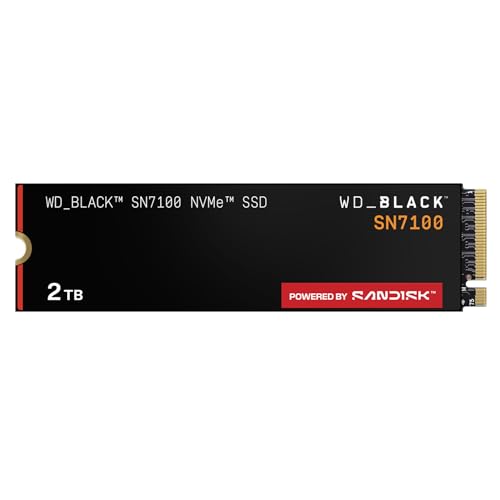
A computer’s storage speed depends on both the drive and the connection it uses: NVMe drives often offer higher advertised transfer rates than SATA SSDs, but the exact difference depends on the models and workload. The question what is faster nvme or ssd often compares unlike categories, because NVMe describes a storage protocol commonly used over PCIe, while SSD describes a type of solid-state storage that may use either NVMe or SATA. That distinction matters when checking a motherboard or laptop, where the slot, supported interface, and physical fit determine what can be installed. Peak sequential figures can help describe large transfers, but they do not by themselves predict game loading, everyday responsiveness, or sustained performance. A useful starting point is to compare drives with the same capacity and stated test conditions, then verify the system’s documentation.
The listed products include PCIe 4.0 or Gen4 NVMe models, but the supplied information does not provide a directly comparable SATA SSD or independent benchmark results. Manufacturer maximum read and write figures are specifications, not a guarantee that a particular computer or task will reach them. A drive’s capacity can also affect which published figures apply, so check the exact variant rather than treating a product family as one specification. For the protocol distinction, the explanation of SATA and NVMe SSDs provides useful context before making a compatibility decision.
| Award | Product | BNR Score About BNR ScoreThe BNR Score is our own rating from 0 to 10, based on performance, design and build, ease of use, and value. It reflects independent research and is never influenced by manufacturers, retailers, or affiliate commissions. Learn more › | |
|---|---|---|---|
| Best Overall |
WD_Black SN7100 2TB NVMe SSD - Gen4 PCIe
|
9.2/10 | Buy |
| Best Budget |
 Kingston NV3 1TB M.2 2280 NVMe SSD |
8.8/10 | Buy |
 SANDISK Optimus 5100 500GB NVMe SSD, PCIe 4.0 |
8.4/10 | Buy | |
| Best Value |
 SANDISK Optimus 5100 1TB NVMe SSD, PCIe 4.0 |
8.4/10 | Buy |
| Best Premium |
 SANDISK Optimus 5100 2TB NVMe SSD, PCIe 4.0 |
8.1/10 | Buy |
What determines whether NVMe or a SATA SSD is faster?
NVMe usually has the higher advertised performance ceiling because it uses the PCIe connection and NVMe protocol, while traditional SATA SSDs communicate through the SATA interface. That broad comparison does not establish how much faster one particular drive will feel. The answer depends on the exact drives, the computer’s supported interface, the task, and whether the published result measures sequential or random operations.
| Supplied NVMe model | Capacity | Interface stated in product data | Maximum sequential claim stated |
|---|---|---|---|
| WD_Black SN7100 | 2TB | Gen4 PCIe | Read up to 7,250 MB/s; write up to 6,900 MB/s |
| Kingston NV3 | 1TB | PCIe 4.0 Gen 4×4 | Read up to 6,000 MB/s; write up to 4,000 MB/s |
| SANDISK Optimus 5100 | 500GB | PCIe 4.0 | Read up to 6,600 MB/s; write up to 5,600 MB/s |
| SANDISK Optimus 5100 | 1TB | PCIe 4.0 | Read up to 7,100 MB/s; write up to 6,700 MB/s |
| SANDISK Optimus 5100 | 2TB | PCIe 4.0 | Read up to 7,100 MB/s; write up to 6,700 MB/s |
These manufacturer-stated figures describe maximum sequential rates, and the supplied data does not include test methods or independent results. They cannot be treated as a controlled comparison against a SATA drive, or even as a complete comparison among these NVMe variants. Use the figures to understand the stated product claims, not as a promise of everyday speed. A real system may be limited by its slot, platform, workload, or other conditions.
For a basic interpretation of the specifications and their limits, keep these distinctions in view.
- NVMe is a protocol; SSD describes the solid-state drive category, including both NVMe and SATA models.
- PCIe generation and lane support can limit the connection a drive can use in a particular system.
- Sequential read and write claims describe transfer patterns, not every application’s storage behavior.
- Random-access behavior requires relevant measurements; the supplied information gives no random performance results.
- Maximum manufacturer claims are not independently measured results from a shared test setup.
- A matching M.2 shape alone does not confirm that a computer supports NVMe through that slot.
Why the SSD label does not settle the comparison
Solid-state drive is an umbrella term for storage that uses flash memory rather than spinning disks. SATA SSDs and NVMe SSDs are both SSDs, but they use different interfaces and protocols. A comparison that says only “NVMe versus SSD” is therefore incomplete: the useful contrast is usually NVMe over PCIe versus SATA SSD, or one named NVMe model versus another.
That distinction also prevents a common shopping mistake. A product described as M.2 may use SATA or NVMe, and the M.2 label refers to a form factor rather than automatically identifying the protocol. A system may accept only one protocol in a particular socket, or may have specific slot-sharing rules. Check the computer or motherboard manual and the drive documentation for the exact slot requirements before ordering.
The article on M.2 form factor and NVMe protocol helps clarify why those terms should not be treated as interchangeable. For a laptop, also confirm physical clearance and any manufacturer requirements for a heatsink or bare drive. The supplied product details identify M.2 2280 for several listed models, but they do not establish compatibility with any particular laptop or motherboard.
Sequential speed claims and everyday tasks
Sequential transfers move data in a largely continuous stream, so their rates can be relevant when copying large files or handling some media workflows. Operating-system activity, app launches, and many game tasks involve a mix of smaller requests and other system work. Without measurements for those tasks, a higher sequential specification does not prove that a user will notice a proportional improvement.
Benchmark results are meaningful only with their conditions attached. Capacity, drive firmware, test software, queue depth, file size, platform, and thermal state can influence reported results. A fair comparison should use the same or clearly comparable test setup and should identify whether a result is a brief peak or a sustained transfer. The supplied product data provides peak claims but no shared benchmark protocol, so it cannot establish a measured winner.
For everyday storage, a compatible SATA SSD may already offer a substantial change from a hard drive, while an NVMe drive offers a different performance ceiling. That does not mean every user needs the highest listed rate. If the workload is dominated by browsing, office documents, or games that do not continuously stream large files, capacity, system support, and total upgrade cost may matter more than a peak sequential number. Those are conditional considerations, not a guarantee of a particular experience.
Capacity affects which model figures apply
Published specifications can vary by capacity within a product line, so compare the exact variant you intend to buy. In the supplied data, the SANDISK Optimus 5100 500GB listing states lower maximum read and write figures than the 1TB and 2TB listings. The WD_Black entry covers its 2TB variant, while the Kingston entry covers its 1TB variant. These are manufacturer claims as provided here; they are not results from a common independent test.
Capacity planning is a separate decision from interface speed. A drive that fills quickly can complicate game libraries, media projects, or file archives, while excess unused capacity may not justify a higher purchase outlay. Consider current files, likely growth, and whether large working files need to remain on the internal drive. The supplied information does not establish how much usable capacity a given user needs, so estimate from the intended workload and available backup or external storage.
Capacity can also affect the practical comparison between two listings. Avoid assuming that a specification attached to one capacity applies identically to every size in that family. Check the manufacturer’s current product page for the exact model identifier, capacity, and any footnotes attached to performance claims. The supplied data does not provide identical test conditions or a complete set of variant-specific measurements for every capacity.
System support, slot fit, and heatsink clearance
Before choosing NVMe over SATA, verify that the system supports the intended protocol and PCIe generation. A drive can be electrically or physically unsuitable even if its connector appears similar. Check the manufacturer documentation for supported drive type, slot configuration, capacity limits where stated, and any lane-sharing behavior. The product information here does not include a compatibility list for specific computers.
Physical fit deserves a separate check, especially in compact laptops and handheld gaming devices. Several product listings specify M.2 2280, but a system may require a different length or impose clearance limits around nearby components. The supplied description says the WD_Black drive is intended for laptops and handheld gaming devices; that general positioning is not proof that it fits a particular model. Confirm the device maker’s supported dimensions and installation requirements.
A heatsink may be useful depending on the system and workload, but the supplied information does not state that these products include heatsinks or specify their operating temperatures. A motherboard’s preinstalled cover may affect clearance, and a laptop may have its own thermal design. Do not assume that adding a heatsink is always necessary or that every heatsink fits every enclosure. Follow the computer, motherboard, and drive manufacturers’ instructions, power down and disconnect equipment as directed, observe electrostatic-discharge precautions, and never force a drive or heatsink into place.
Use this checklist to verify the connection and the physical installation before purchase.
Use this checklist to verify the connection and the physical installation before purchase.
- Confirm that the target slot supports NVMe, rather than assuming every M.2 socket accepts the same protocol.
- Check the system manual for PCIe generation, lane support, slot sharing, and any stated capacity restrictions.
- Match the drive length listed by the manufacturer to the space available in the computer or handheld.
- Review whether a motherboard cover or laptop thermal assembly changes heatsink clearance.
- Confirm whether the drive listing includes a heatsink; the supplied data does not establish that for these variants.
- Use the device and drive makers’ installation instructions and observe their handling and electrostatic-discharge precautions.
Warranty, endurance, and software are distinct from speed
Performance specifications do not answer questions about endurance or warranty coverage. The supplied Kingston NV3 listing states a five-year limited warranty and includes Acronis cloning software. The SANDISK Optimus 5100 description gives an endurance figure of up to 1,200 TBW for its 4TB model, which is not one of the capacities represented in the supplied listings. That figure should not be applied to the 500GB, 1TB, or 2TB variants.
TBW is a stated total-bytes-written endurance rating, not a prediction of the service life of an individual drive. Warranty terms are also subject to the manufacturer’s conditions and may have limits that should be checked in the current documentation. The supplied WD_Black data mentions downloadable WD_BLACK Dashboard software for Windows, and the SANDISK description mentions its Dashboard application. Software availability does not establish a speed advantage, and the described Windows support may not suit every operating system.
These ownership details can matter more than a modest difference in peak sequential claims for users who need cloning support, firmware updates, or specific warranty terms. Verify which tools support the exact model and operating system, and review the warranty policy directly before relying on it. No supplied information establishes comparative reliability, failure rates, or how long an individual drive will operate.
When the higher NVMe ceiling matters
NVMe’s higher potential transfer rates are most relevant when the platform supports the drive and the workload can use that throughput. Large sequential file transfers and some content-creation tasks can make storage bandwidth more consequential than casual everyday use. Even then, the available product claims do not tell how long a drive sustains a rate, and they do not show performance under a particular editing or export workload. Buyers should avoid treating a peak read figure as a complete measure of creator performance.
For gaming, the game, system, and data access pattern all affect loading behavior. A higher advertised rate alone cannot establish a specific improvement in load times. A drive intended for a laptop or handheld may also be selected for capacity or power considerations, but the supplied descriptions do not provide comparable measured power consumption across all models. Use the manufacturer’s documented claims with their stated scope, and do not infer a broader result.
A SATA SSD can remain a sensible option when the system lacks NVMe support, when the intended workload does not benefit from additional throughput, or when a suitable existing SATA drive meets the storage need. Conversely, a compatible NVMe drive may be a practical choice for an upgrade that calls for PCIe storage bandwidth. Neither interface is universally the right answer without knowing the computer and task. The comparison should begin with support and workload rather than the largest number on a product page.
How to make a useful model-to-model comparison
Compare like with like wherever possible: match capacity, interface generation, and test type before drawing conclusions. If two product pages publish different benchmark conditions, treat their peak figures as separate manufacturer claims rather than a head-to-head result. A fair review of independent testing would need named test hardware and workloads, repeatable methods, and results that distinguish short bursts from sustained transfers. None of those test results are supplied here.
When the precise comparison remains unclear, prioritize information that can be verified for the exact model. Confirm the part identifier, capacity, supported interface, form factor, warranty, and any endurance rating applicable to that capacity. Then evaluate whether the likely workload can use additional bandwidth and whether the system can provide it. This method avoids paying for a capability the computer cannot use, while avoiding the assumption that all SSDs behave alike.
For the named options in this article, manufacturer maximum figures show that the listed NVMe models advertise high sequential rates, but they do not answer a direct NVMe-versus-SATA benchmark question. No SATA model or independent comparable result is supplied. The specific choice therefore depends on the system’s supported interface and the buyer’s workload, capacity needs, warranty priorities, and budget.
Check the computer documentation first, then compare exact-capacity manufacturer specifications and warranty terms; that is the reliable way to determine whether NVMe’s higher stated ceiling matters for your setup.
About the author
Tyler Brooks writes about SSD performance, endurance ratings, and thermal behavior. He reviews manufacturer documentation, independent test data, and customer feedback to explain how heatsinks, throttling, and DRAM cache affect everyday use.