
Is Nvme Ssd or Hdd: Storage Differences
Is NVMe SSD or HDD better for your system? Learn how storage technology affects speed, noise, capacity, and workload fit in November 2026.
 By Owen Fischer
Updated November 12, 2026
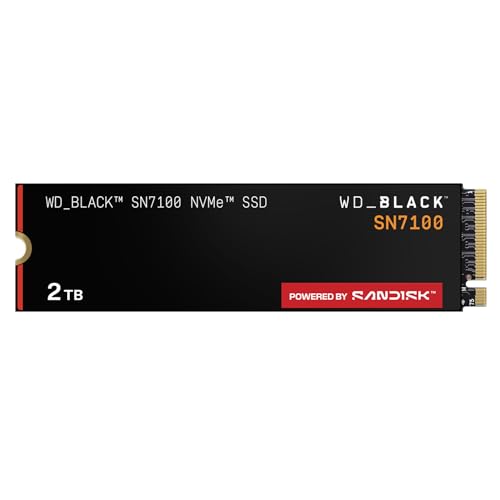
A computer with an M.2 slot may accept an NVMe drive, but that does not make an HDD the same kind of device or guarantee a particular upgrade will fit. The question is nvme ssd or hdd is best answered by separating the technologies: NVMe is a protocol used by solid-state drives, while HDD means hard disk drive, a storage device that uses spinning disks. Both can store files, but their construction, connection requirements, and practical trade-offs differ.
For an operating-system drive, frequent application use, or game storage where load time matters, an SSD is often the more relevant option to investigate; an HDD can remain useful for bulk storage where capacity and cost per unit of space matter. Those are general distinctions, not a promise about a particular product or computer. The supplied product details cover NVMe SSDs and an NVMe enclosure, but do not provide an HDD model for a direct specification comparison. Check the computer or motherboard documentation and the drive manufacturer’s information before relying on compatibility or performance assumptions.
The connection itself can also cause confusion: M.2 describes a physical form factor, whereas NVMe describes a storage protocol. Our M.2 and NVMe explanation clarifies why those terms are not interchangeable. For another useful distinction, the SATA SSD and NVMe overview explains how interface and protocol affect the comparison.
| Award | Product | BNR Score About BNR ScoreThe BNR Score is our own rating from 0 to 10, based on performance, design and build, ease of use, and value. It reflects independent research and is never influenced by manufacturers, retailers, or affiliate commissions. Learn more › | |
|---|---|---|---|
| Best Overall |
WD_Black SN7100 2TB NVMe SSD - Gen4 PCIe
|
9.2/10 | Buy |
| Best Value |
 Kingston NV3 1TB M.2 2280 NVMe SSD |
8.8/10 | Buy |
| Best Budget |
 SABRENT USB-C NVMe Enclosure & Reader |
8.6/10 | Buy |
| Best Premium |
 SIX NVME M.2 SSD PCIe 4.0-1TB m.2 2280 ssd |
8.6/10 | Buy |
 SANDISK Optimus 5100 500GB NVMe SSD, PCIe 4.0 |
8.4/10 | Buy |
NVMe SSD or HDD: What the Difference Means for Your Storage
An NVMe SSD and an HDD can serve as storage, but they use different technologies and should not be treated as interchangeable specifications. An NVMe SSD stores data on flash memory and communicates using the NVMe protocol over a supported connection. An HDD stores data on rotating magnetic platters and uses a compatible drive interface. The practical choice depends on your computer’s supported connections, the task, capacity needs, and the particular drives being considered.
| Comparison point | NVMe SSD | HDD |
|---|---|---|
| Storage technology | Flash memory | Rotating magnetic platters |
| Protocol or interface | NVMe protocol; system connection support must be verified | Depends on the specific drive and system connection |
| Physical fit | May use an M.2 card; check dimensions and slot support | Check the drive’s physical format and available bay |
| Details available here | Product data includes several NVMe SSD specifications | No specific HDD model or measured figures supplied |
These distinctions help frame the decision without pretending that the supplied information establishes a direct performance contest.
- NVMe names a protocol, while SSD names a solid-state storage device.
- HDD storage uses moving platters, unlike the flash memory in an SSD.
- M.2 is a form factor, so an M.2 slot alone does not confirm NVMe support.
- Compare a specific HDD and SSD only when their capacities, interfaces, and test conditions are known.
- Check the computer’s documentation for supported drive types, slots, bays, and capacity limits.
NVMe, SSD, HDD, and M.2 Are Different Terms
SSD describes a class of storage that has no spinning platters. NVMe is a protocol designed for communication with solid-state storage over supported system connections. Many consumer NVMe drives are small M.2 cards, but M.2 alone does not say whether a drive uses NVMe or SATA. HDD, by contrast, describes a storage device based on rotating magnetic media; the exact interface and physical size depend on the model.
This distinction matters when replacing a drive. A laptop may have a particular M.2 slot, a space for another drive, or only a specific supported configuration. A desktop motherboard may provide several storage connectors, but slots can differ in protocol support, lane sharing, and physical clearance. The system manual and manufacturer compatibility documentation are stronger evidence than a connector’s appearance or a broad product description.
Interface labels also affect expectations. The product information supplied here describes several PCIe 4.0 NVMe drives, but those listed specifications do not establish how a drive will perform in every computer. A system with different supported PCIe capabilities, firmware, workload, or thermal conditions may not reproduce an advertised peak figure. That point applies to interpreting product claims, not to estimating a specific HDD result that has not been provided.
What Speed Claims Do and Do Not Tell You
Sequential read and write figures describe transfers of data in a particular pattern and are commonly stated as maximum specifications. They can help distinguish published capabilities, but they do not by themselves predict every everyday task. Booting an operating system, opening a small application, copying a large video, and loading scattered game assets involve different access patterns. Random access behavior, drive fill level, system configuration, workload, and thermal conditions can all affect observed results.
The supplied listings state maximum sequential figures for some NVMe SSD capacities. Those are product-description claims, not independently measured results from a shared benchmark. The descriptions also vary by model and capacity, so figures tied to one capacity should not automatically be assigned to another. No corresponding HDD measurements, common test platform, test methodology, or matched capacities are supplied here.
A fair comparison needs evidence gathered under comparable conditions. Look for the exact drive models and capacities, the benchmark software and workload, the connection used, and whether results came from a short burst or a sustained transfer. Temperature and system power settings can matter as well. Without those details, a peak specification can provide context but cannot establish a real-world advantage for every workload.
For a buyer, the sensible takeaway is conditional: an NVMe SSD may be attractive where responsive access or high-throughput transfers are priorities and the system supports it. An HDD may suit a different role when the priority is storing a large collection and the drive’s actual cost and fit are appropriate. Neither conclusion supplies a guaranteed loading time or performance result for an individual computer.
Match the Storage Type to the Workload
For an operating system and frequently used applications, buyers often prioritize responsive storage and a compatible installation. For games, capacity can matter alongside load behavior, especially when a library occupies substantial space. Creative work can involve large source files, caches, and repeated transfers, making both available capacity and the pattern of writing important. Everyday documents and media archives may have different demands from a scratch disk used for sustained work.
These are workload considerations, not guarantees that one category will produce a particular result. The software, processor, memory, network, and other system limits can influence how much a storage change affects a task. A drive with a high advertised sequential figure may not change a task that is limited elsewhere. Conversely, a workload that moves large files may make storage behavior more relevant than a light browsing workload does.
Storage roles can also be split. A supported SSD can hold the operating system and frequently used programs, while a separate HDD can hold less frequently accessed files. That arrangement depends on available connections, physical space, operating-system setup, and the user’s backup plan. It should not be assumed that every laptop or desktop has room or support for both drive types.
Use these workload questions to narrow the decision before comparing specifications:
- For system and application use, verify that the proposed SSD protocol and form factor match the computer.
- For games, consider library size and available capacity as well as published speed claims.
- For large creative projects, identify whether work involves repeated transfers or long sustained writes.
- For archives, weigh storage capacity and backup needs rather than relying on peak transfer figures alone.
- For mixed use, confirm that the computer supports each proposed drive and has the needed physical space.
Capacity, Endurance, and Warranty Need Model-Specific Evidence
Capacity determines how much data a drive can hold, but a suitable amount depends on the user’s operating system, applications, games, media, and future projects. Keep room for working files and normal system use instead of planning around a drive being completely full. A larger capacity may be useful for a growing library, while a smaller drive may make sense for a narrower role. Neither choice makes the storage technology itself a substitute for backup.
Endurance ratings and warranty terms are separate details, and neither should be generalized from one product to all NVMe SSDs or HDDs. The supplied Kingston listing states a limited warranty, while the supplied product information for other models gives different or incomplete details. The SANDISK listing mentions a maximum endurance figure for a specified larger-capacity version, not necessarily the capacity shown in that listing. A buyer should check the exact model, capacity, current manufacturer’s terms, and exclusions before treating any rating as applicable.
Endurance is generally expressed as a manufacturer-rated amount of data written under stated terms, not a prediction of when an individual drive will fail. Warranty coverage is also not a promise that data can be recovered or that a drive will remain available for a particular period. HDD ownership has its own model-specific specifications and warranty conditions, none of which are included for a particular HDD here. Maintain a separate backup of important files regardless of storage type.
Compatibility, Clearance, and Heat Require a System Check
Before buying an NVMe drive, confirm the computer supports the protocol and physical format, and check the intended slot’s documentation. Verify whether the slot is available, whether another component shares its connection, and whether the system has a capacity limit or installation requirement. For a laptop, the internal space and supported drive dimensions are especially important. A drive that is listed for one type of system is not automatically documented for every system that uses a similar connector.
Heatsinks can affect clearance. A desktop motherboard may have a cover or included thermal solution, while a laptop may allow limited height. The supplied information identifies a heatsink with one listed NVMe drive and an aluminum enclosure for an external reader, but this does not prove that either arrangement suits a particular computer. Check the computer, motherboard, and drive documentation to determine the required configuration; a heatsink is not universally required.
External enclosures add another layer of compatibility. The supplied enclosure listing says it supports M.2 NVMe drives in several stated lengths and does not support M.2 SATA drives. Its USB connection also means the host port and cable can limit transfer rates. An external enclosure is not an HDD and does not turn an NVMe drive into one; it changes how the compatible SSD connects to the computer.
Use manufacturer documentation to resolve the system-specific checks before purchasing or installing storage:
- Confirm whether the system supports NVMe, SATA, or both in the intended connector.
- Check M.2 length, available slot count, and any documented capacity restrictions.
- For an HDD, verify the required interface, physical bay, and power connection for that exact model.
- Measure or confirm heatsink and cover clearance using the computer manufacturer’s specifications.
- Check whether an external enclosure supports the drive protocol and the host’s available USB connection.
- Follow computer, motherboard, and drive instructions, with appropriate electrostatic-discharge precautions.
Limits of the Available Product Information
The product data supplied for this article is not a matched NVMe SSD-versus-HDD comparison. It contains several NVMe SSD listings and one enclosure for NVMe drives, but no specific HDD model, HDD capacity, HDD interface, HDD warranty, or comparable test results. As a result, it would be misleading to assign a numerical speed difference, capacity advantage, endurance comparison, or system fit to an unnamed HDD.
Some listings also include manufacturer or product-description statements about performance and intended uses. Those statements should be read in their stated scope, including the listed model and capacity. A peak figure for one drive does not establish performance for the entire product family, and an advertised use case is not the same as a result measured on the reader’s system. Current manufacturer documentation should be checked for updated specifications, supported configurations, software, and warranty terms.
The data also does not provide a common set of independent benchmarks, operating temperatures, sustained-write tests, or noise measurements for both technologies. A shopper seeking those comparisons should find tests that identify exact models, capacities, test setup, workload, and measurement method. Results from unlike test conditions should not be combined as though they were directly comparable. This evidence gap is a reason to keep general technology explanations separate from model-specific claims.
Make the Decision From the Actual System and Task
For a system drive or frequently used programs, an NVMe SSD may be a suitable direction if the computer explicitly supports the drive’s protocol, form factor, and capacity. For bulk files, an HDD may be worth considering if a compatible bay or connection exists and its model-specific terms meet the need. Buyers who need both responsiveness and a larger archive may investigate a two-drive arrangement, but only after confirming space and support.
Do not decide from the words M.2, SSD, or a maximum speed claim alone. Verify the exact drive model and capacity, compare evidence gathered under similar conditions, and account for workload, system limits, thermals, warranty, and backup needs. For installation or handling, follow the computer, motherboard, and drive manufacturers’ instructions, power down and disconnect equipment as directed, observe electrostatic-discharge precautions, and do not force a drive or heatsink into place.
The practical answer is that NVMe SSD and HDD name different storage approaches, not two interchangeable labels. Check your system documentation first, then compare specific supported models against the workload and capacity you actually need.
About the author
Owen Fischer is an editor focused on value and troubleshooting, from budget Gen 3 drives to detection and speed problems after an upgrade. He compares published specifications and real-world user reports to help readers avoid common storage upgrade mistakes.