
Ssd vs Ssd Nvme M2? Know What Fits
Check M.2 fit, interface, and capacity before buying. Compare these NVMe SSD options for your system and workload in November 2026.
 By Tyler Brooks
Updated November 12, 2026
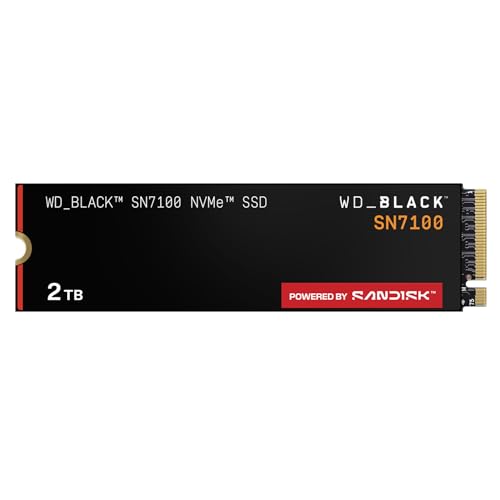
An M.2 slot doesn’t automatically mean a system supports an NVMe drive, so checking the interface first can save a frustrating return. The question Ssd Vs Ssd Nvme M2 often comes down to separating the drive’s physical M.2 form factor from its storage protocol, then confirming what your motherboard or laptop supports. This roundup includes PCIe Gen 4 and Gen 3 options, with capacities from 500GB to 2TB. Their listed features vary, so the highest advertised speed isn’t automatically the best fit for every build. If you’re sorting out the terminology, this guide to M.2 SSD versus NVMe SSD differences explains why the connector and protocol aren’t interchangeable terms.
The listed specifications show clear tradeoffs: the WD_Black SN7100 offers a 2TB capacity and manufacturer-rated speeds up to 7,250MB/s read, while the Silicon Power 2TB drive is a Gen 3 model rated up to 2,200MB/s read and 1,600MB/s write, with a stated 600 TBW. The Kingston NV3 includes Acronis cloning software and a five-year limited warranty; the SIX listing says it includes a heatsink and installation items. SANDISK Optimus 5100 models come in 500GB and 1TB options, but the supplied endurance figure applies to the 4TB model, not these capacities. Treat manufacturer speed claims as maximums, and check system support, physical clearance, warranty terms, and workload needs before buying.
| Award | Product | BNR Score About BNR ScoreThe BNR Score is our own rating from 0 to 10, based on performance, design and build, ease of use, and value. It reflects independent research and is never influenced by manufacturers, retailers, or affiliate commissions. Learn more › | |
|---|---|---|---|
| Best Overall |
WD_Black SN7100 2TB NVMe SSD - Gen4 PCIe
|
9.2/10 | Buy |
| Best Budget |
 Kingston NV3 1TB M.2 2280 NVMe SSD |
8.8/10 | Buy |
| Best Value |
 SIX NVME M.2 SSD PCIe 4.0-1TB m.2 2280 ssd |
8.6/10 | Buy |
 SANDISK Optimus 5100 500GB NVMe SSD, PCIe 4.0 |
8.4/10 | Buy | |
 SANDISK Optimus 5100 1TB NVMe SSD, PCIe 4.0 |
8.4/10 | Buy | |
| Best Premium |
 Silicon Power 2TB NVMe M.2 PCIe Gen3x4 2280 SSD |
8.0/10 | Buy |
SSD and NVMe M.2 Buying FAQs
Does an M.2 slot guarantee NVMe compatibility?
No, M.2 describes a form factor, while NVMe is a protocol used over PCIe. Check your motherboard or laptop manual for supported M.2 keying, drive length, and NVMe or SATA support before ordering, rather than relying on the connector’s appearance.
Can a PCIe Gen 4 NVMe SSD work in a Gen 3 system?
Often, PCIe devices can operate at a mutually supported generation, but confirm the host and drive requirements before buying. A Gen 4 drive in a Gen 3 slot may not reach its advertised peak speed, and compatibility depends on the system.
Which listed drive includes migration software or a heatsink?
The Kingston NV3 listing includes Acronis cloning software, while the SIX listing says a heatsink and installation items are included. Confirm the current listing and system clearance, since software support and physical fit can affect your installation plan.
Is a higher sequential read speed always better for gaming?
No, advertised sequential read speed is only one specification and doesn’t guarantee a particular game-loading result. Capacity, random read performance, the PCIe generation your system supports, and the game’s workload also matter, and those details aren’t all supplied for these drives.
What should I check before choosing a 500GB or 2TB SSD?
Choose capacity around your operating system, applications, games, and project files, while leaving room for future needs. Check the exact M.2 length and interface, warranty terms, and stated endurance; the supplied 600 TBW figure belongs to the Silicon Power drive only.
About the author
Tyler Brooks writes about SSD performance, endurance ratings, and thermal behavior. He reviews manufacturer documentation, independent test data, and customer feedback to explain how heatsinks, throttling, and DRAM cache affect everyday use.