
Pcie Nvme Gen 4 vs Gen 3? Compare Speed and Compatibility
Check your system’s PCIe support before buying. pcie nvme gen 4 vs gen 3 choices and practical upgrade considerations for November 2026, including capacity and fit.
 By Tyler Brooks
Updated November 12, 2026

An M.2 slot alone doesn’t guarantee that a system supports every NVMe drive or PCIe generation. Pcie Nvme Gen 4 Vs Gen 3 matters most when you’re matching an SSD to a motherboard or laptop and deciding whether advertised speed is useful for your workload. The listed products span a PCIe 3.0 expansion card, a PCIe 3.0 SSD, and several PCIe 4.0 drives, so they aren’t all direct substitutes. For a clearer distinction between the drive protocol and its connection, see this guide to NVMe and PCIe. Check your system manual for supported interface, slot, and drive dimensions before you buy.
The product details give useful starting points, but rated peak speeds aren’t guaranteed in every system or workload. The Patriot P320 is listed as a 512GB PCIe Gen 3×4 M.2 2280 SSD with manufacturer-rated sequential speeds up to 3000MB/s read and 2200MB/s write; the Kingston NV3 is a 1TB PCIe 4.0 drive rated up to 6000MB/s read. The Ediloca EN880E is listed as 4TB, while the SANDISK Optimus 5100 listing includes speed claims qualified by capacity, so don’t assume those figures apply to its 500GB version. The LinksTek card is an expansion adapter, not an SSD. Compare capacity, interface, warranty details, and fit against your actual build, not just the largest speed figure.
| Award | Product | BNR Score About BNR ScoreThe BNR Score is our own rating from 0 to 10, based on performance, design and build, ease of use, and value. It reflects independent research and is never influenced by manufacturers, retailers, or affiliate commissions. Learn more › | |
|---|---|---|---|
| Best Overall |
PCIE-PEX8747M8 PCIE 3.0 x8 Interface to 4-Port
|
8.8/10 | Buy |
| Best Premium |
 Kingston NV3 1TB M.2 2280 NVMe SSD |
8.8/10 | Buy |
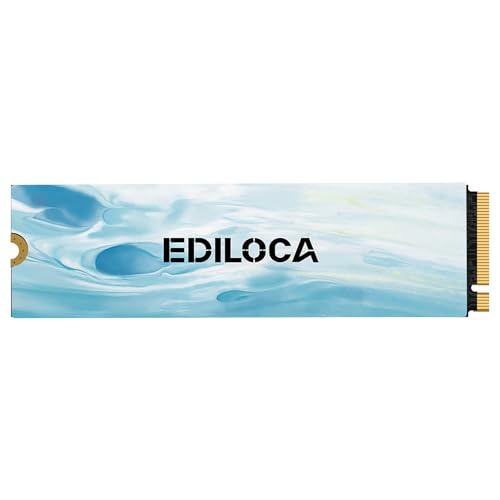 Ediloca EN880E M.2 SSD 4TB NVMe SSD M2 2280 PCIe |
8.8/10 | Buy | |
| Best Budget |
 Patriot P320 512GB PCIe Gen 3x4 M.2 2280 SSD |
8.6/10 | Buy |
| Best Value |
 SANDISK Optimus 5100 500GB NVMe SSD, PCIe 4.0 |
8.4/10 | Buy |
PCIe Gen 4 and Gen 3 buying questions
Will a PCIe Gen 4 NVMe SSD work in a Gen 3 system?
Often, yes, if the motherboard or laptop supports the drive’s NVMe protocol and M.2 form factor. A PCIe connection generally negotiates a supported generation, but the drive will be limited by the host system. Check the manual for slot support and boot requirements.
Does an M.2 slot confirm NVMe compatibility?
No, M.2 describes a physical form factor, not necessarily the storage protocol. Some M.2 slots support SATA, NVMe, or both, and keying and length can vary; verify the motherboard or laptop documentation before choosing an NVMe SSD.
Will a Gen 4 SSD always feel faster than a Gen 3 SSD?
No, a higher advertised sequential read speed doesn’t guarantee a noticeable improvement for every task. Game loading, everyday computing, and random read performance depend on the workload and system, while large file transfers may benefit more from sequential speed.
Is the LinksTek PCIe card itself an NVMe SSD?
No, the PCIE-PEX8747M8 is an expansion card with four M.2 NVMe slots, not a storage drive. Its listing specifies a PCIe 3.0 x8 host interface and says motherboard PCIe bifurcation isn’t required; confirm your desktop has a suitable slot.
What should I check before buying a Gen 4 or Gen 3 drive?
Check the system manual for NVMe support, PCIe generation, M.2 length, and available clearance. Also compare capacity, warranty, and any stated TBW; for migration planning, the NVMe SSD operating-system guide offers related context.
About the author
Tyler Brooks writes about SSD performance, endurance ratings, and thermal behavior. He reviews manufacturer documentation, independent test data, and customer feedback to explain how heatsinks, throttling, and DRAM cache affect everyday use.